 Universal - go to homepage
-
Projects
-

Projects Domains
Project Technology
-
Project Details
Project Name: Dynamic Query Forms for Database Queries
Project Code: ILSW002DM
Summary:
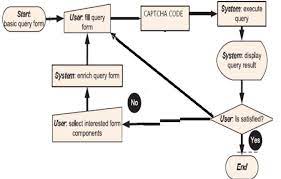
Modern scientific databases and web databases maintain large and heterogeneous data. These real-world databasescontain over hundreds or even thousands of relations and attributes. Traditional predefined query forms are not able to satisfyvarious ad-hoc queries from users on those databases. This paper proposes DQF, a novel database query form interface, which isable to dynamically generate query forms. The essence of DQF is to capture a user’s preference and rank query form components,assisting him/her to make decisions. The generation of a query form is an iterative process and is guided by the user. Ateach iteration, the system automatically generates ranking lists of form components and the user then adds the desired formcomponents into the query form. The ranking of form components is based on the captured user preference. A user can alsofill the query form and submit queries to view the query result at each iteration. In this way, a query form could be dynamicallyrefined till the user satisfies with the query results. We utilize the expected F-measure for measuring the goodness of a queryform. A probabilistic model is developed for estimating the goodness of a query form in DQF. Our experimental evaluation anduser study demonstrate the effectiveness and efficiency of the system
Existing database clientsand tools make great efforts to help developers designand generate the query forms, such as EasyQuery [3],Cold Fusion [1], SAP, Microsoft Access and so on.They provide visual interfaces for developers to createor customize query forms. The problem of those toolsis that, they are provided for the professional devel-opers who are familiar with their databases, not forend-users [16]. [17] proposed a system which allowsend-users to customize the existing query form at runtime. However, an end-user may not be familiar withthe database. If the database schema is very large, it isdifficult for them to find appropriate database entitiesand attributes and to create desired query forms.Automatic Static Query Form: Recently, [16] [18] pro-posed automatic approaches to generate the databasequery forms without user participation. [16] presenteda data-driven method. It first finds a set of dataattributes, which are most likely queried based on thedatabase schema and data instances. Then, the queryforms are generated based on the selected attributes.[18] is a workload-driven method. It applies clusteringalgorithm on historical queries to find the represen-tative queries. The query forms are then generatedbased on those representative queries. One problem ofthe aforementioned approaches is that, if the databaseschema is large and complex, user queries couldbe quite diverse. In that case, even if we generatelots of query forms in advance, there are still userqueries that cannot be satisfied by any one of queryforms. Another problem is that, when we generatea large number of query forms, how to let usersfind an appropriate and desired query form wouldbe challenging. A solution that combines keywordsearch with query form generation is proposed in[12]. It automatically generates a lot of query formsin advance. The user inputs several keywords to findrelevant query forms from a large number of pre-generated query forms. It works well in the databaseswhich have rich textual information in data tuplesand schemas. However, it is not appropriate when theuser does not have concrete keywords to describe thequeries at the beginning, especially for the numericattributes.Autocompletion for Database Queries: In [26], [21],novel user interfaces have been developed to assist theuser to type the database queries based on the queryworkload, the data distribution and the databaseschema. Different from our work which focuses onquery forms, the queries in their work are in the formsof SQL and keywords.Query Refinement: Query refinement is a commonpractical technique used by most information retrievalsystems [15]. It recommends new terms related tothe query or modifies the terms according to thenavigation path of the user in the search engine. Butfor the database query form, a database query is astructured relational query, not just a set of term
More Details
-
Technology Use: ASP. NET MVC, MS-SQL, JAVASCRIPT, HTML, CSS, BOOTSTRAP, ENTITY FRAMEWORK
-
Modules: Query Form, Results, Ranking Metrix, etc
-
Algoritham Use: Ranking Based Query Selection